
7 Critical Shoe Manufacturing Cost Factors That Protect Your Profit in 2026
Shoe manufacturing cost is not one universal price per pair. It is the result of a defined product specification: materials, construction, tooling, order quantity, sampling, branding, quality control and delivery terms. This guide shows brands what actually changes a factory quote—and what must be settled before comparing suppliers.
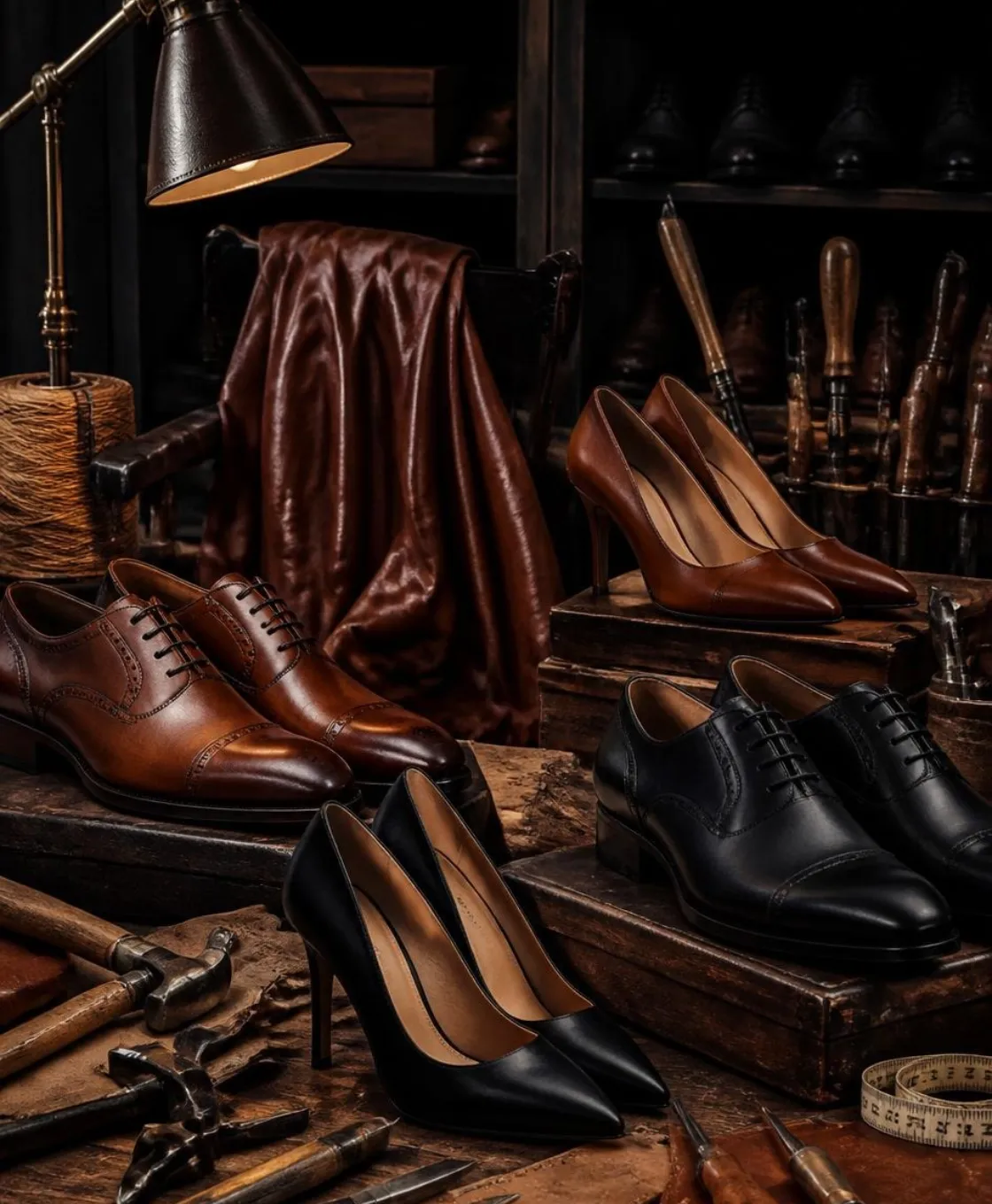
What Determines Shoe Manufacturing Cost?
Handmade Shoe Factory is a B2B footwear manufacturer in Lahore, Pakistan, established in 2003. We develop private label, OEM and custom men's and women's footwear for startup brands, established labels, retailers, wholesalers, importers, luxury businesses and corporate buyers. More than 750K pairs have been delivered across 45+ export countries.
From a factory perspective, useful costing starts with a buildable specification. A drawing alone does not tell a factory the leather grade, lining, last, outsole compound, construction method, logo process, box size or size breakdown. Each missing decision forces an assumption. Two factories can therefore appear to quote the same shoe while pricing materially different products.
The purpose of this guide is not to publish an artificial “average price.” It is to help buyers compare like with like. International footwear-costing guidance separates direct materials, labour, manufacturing overheads and export-related costs. The underlying principle remains useful: every quote should connect to the materials consumed, operations performed and delivery responsibility agreed. See the UNIDO footwear production-cost resource for the formal costing framework.
Costing Across the Entire Footwear Programme
A serious quote covers more than an upper and a sole. We review the product, brand presentation and export requirements together so that development decisions support the buyer's market and target margin.
Women's Footwear
Heels, sandals, mules, flats, loafers, boots, bridal and fashion styles developed in leather, synthetic, textile and occasion-wear materials.
Men's Footwear
Oxfords, Derbies, loafers, moccasins, boots and project-specific footwear with construction and finishing matched to the intended price tier.
Private Label
Adapt an agreed construction, material package and finish under your own identity, with flexible order planning for new and growing brands.
Custom OEM
Build from a tech pack, sketch or reference with custom pattern, last, material, component and construction decisions documented before bulk production.
Branding & Packaging
Logo application, insock branding, labels, shoeboxes, tissue, dust bags, hangtags and retail information costed as part of the finished product.
Export Support
Quality inspection, packing information and export preparation aligned with the destination, shipment method and responsibilities agreed with the buyer.
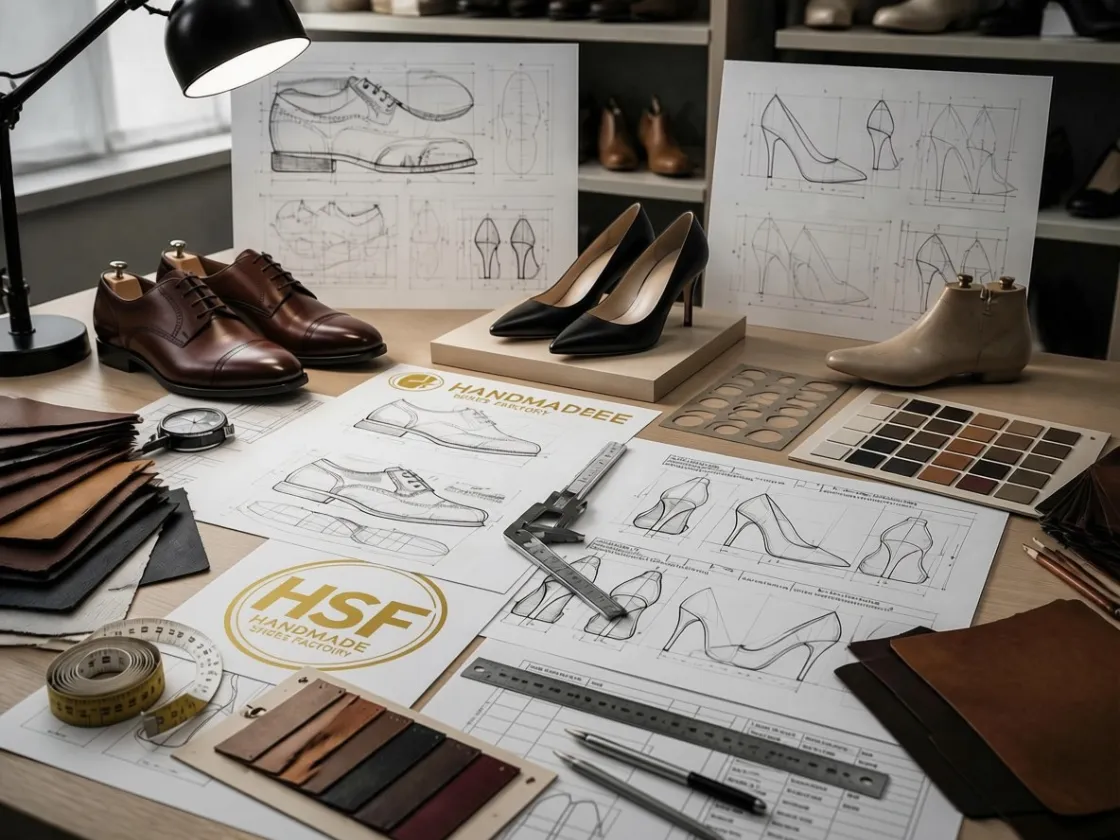
Materials and Construction Set the Base Cost
The first layer of footwear production cost is the bill of materials. “Leather shoe” is not a complete specification: full-grain, corrected-grain, split leather, suede, PU and textile uppers have different purchase prices, cutting yields and finishing requirements. Natural leather also varies by grade and usable area, so pattern placement and unavoidable cutting waste matter. Lining, sock, insole board, toe puff, counter, shank, heel, outsole, adhesives, thread and hardware must be included as separate components.
Construction then determines how much labour and how many operations are required. A cemented build follows a different cutting, closing, lasting and sole-attaching sequence from Blake stitch or Goodyear welt. Brogue punching, hand colouring, edge finishing, decorative stitching, complex straps, covered heels and delicate bridal embellishment add handling time even when the raw material looks similar.
- 01 Material grade and consumptionThe quote changes with quality, thickness, usable yield, colour, supplier minimums and every hidden structural component—not only the visible upper.
- 02 Construction and labour contentMore pieces, tighter tolerances, stitched constructions and labour-intensive finishing increase standard production time per pair.
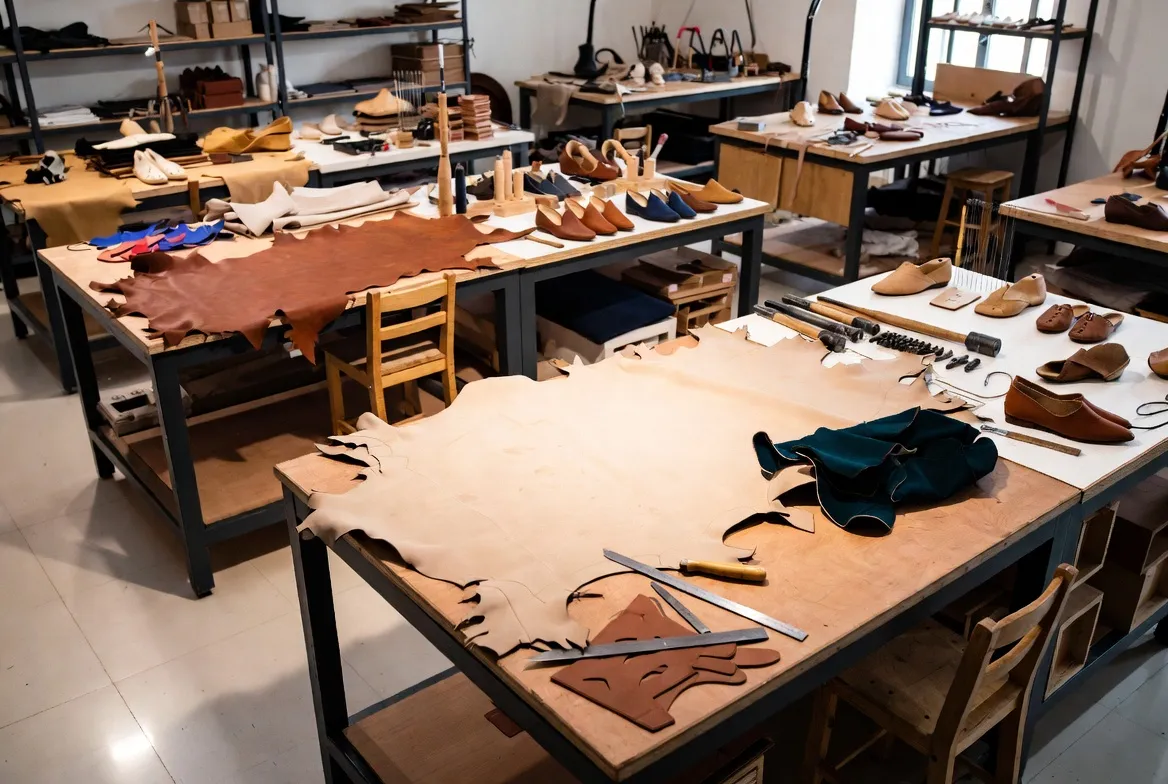
Tooling and MOQ Change the Unit Economics
Some development work is reusable across a production run. Patterns, grading, trial lasts, cutting knives, embossing plates and—in designs that need them—custom heel or outsole moulds create costs before the first bulk pair is finished. A buyer should ask whether tooling is included, separately charged, reused on repeat orders and owned by the buyer after payment. A lower first quote means little if essential tooling appears later as an unexpected invoice.
Order quantity affects how these fixed development costs are distributed. It also changes material purchasing efficiency and production planning. A total order of several hundred pairs may still behave like multiple small runs when it is divided across many styles, colours and narrow size sets. Every colour can require a separate material minimum; every style can require its own patterns, cutting setup and sample approval.
- 03 Lasts, patterns, dies and mouldsCustom shapes and proprietary components can require one-time development or tooling that should be identified before production approval.
- 04 MOQ, colour splits and size runsFlexible MOQ supports market testing, but highly fragmented orders can carry more setup and material waste per pair than a focused run.
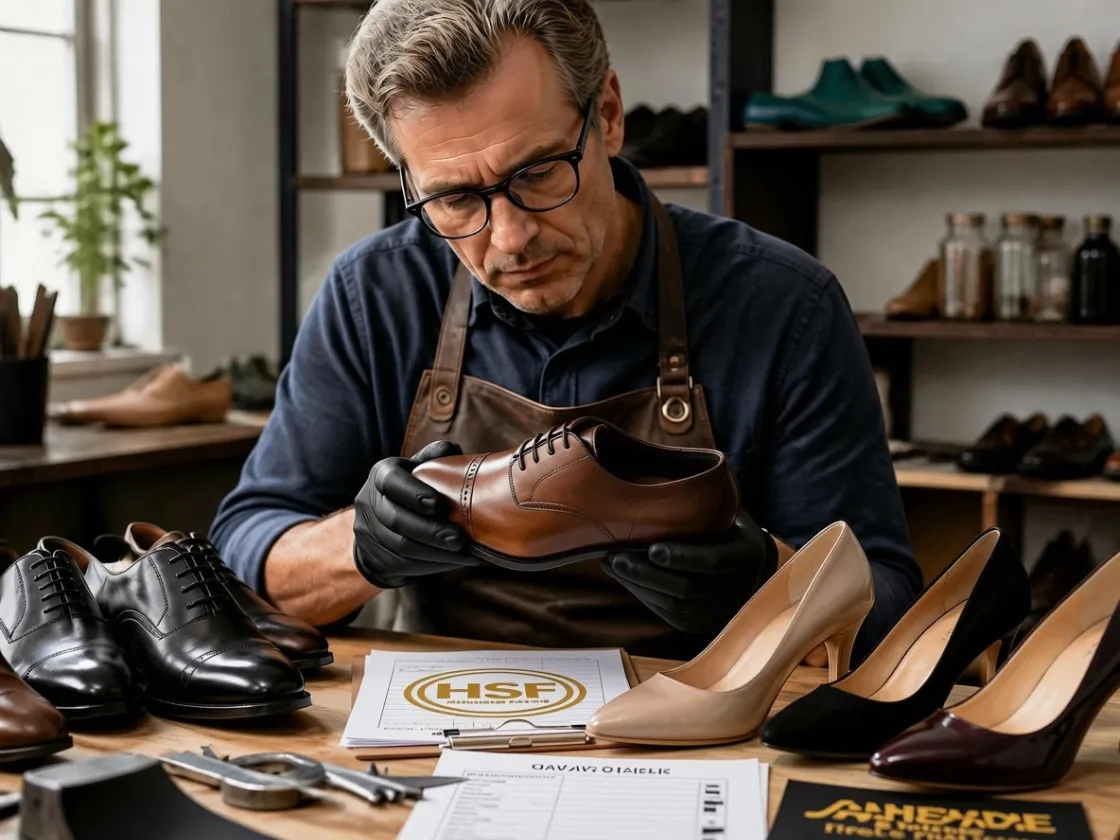
Sampling and Quality Control Protect the Bulk Order
A sample is not simply one expensive pair. It compresses design interpretation, pattern work, component sourcing, trial cutting, stitching, lasting, finishing and review into a small development run. Handmade Shoe Factory's sample development is typically around 10–14 days once the working specification is confirmed, although complexity and material sourcing can affect timing.
The cost risk appears when a buyer treats the first sample as a rough visual mock-up rather than the future production reference. Fit, toe shape, heel pitch, upper tension, lining, branding location, stitch density, outsole finish, colour and packaging should be checked before written approval. Changes after approval may require new patterns, replacement materials, repeated labour or altered tooling. Those are real costs, not arbitrary factory penalties.
Quality control also belongs in the planned cost. Incoming material checks, in-process construction checks, size consistency, pair matching, finishing review and packing inspection require time. Removing inspection may lower the visible factory price while increasing the buyer's exposure to rejects, returns, chargebacks and damaged brand trust.
- 05 Sample rounds and design revisionsClear feedback and consolidated revisions control development cost better than repeated changes made one issue at a time.
- 06 Quality standard and inspection depthDefine the approved sample, tolerances, inspection points and packing checks so quality is costed rather than assumed.
Branding, Packaging and Freight Complete the Landed Cost
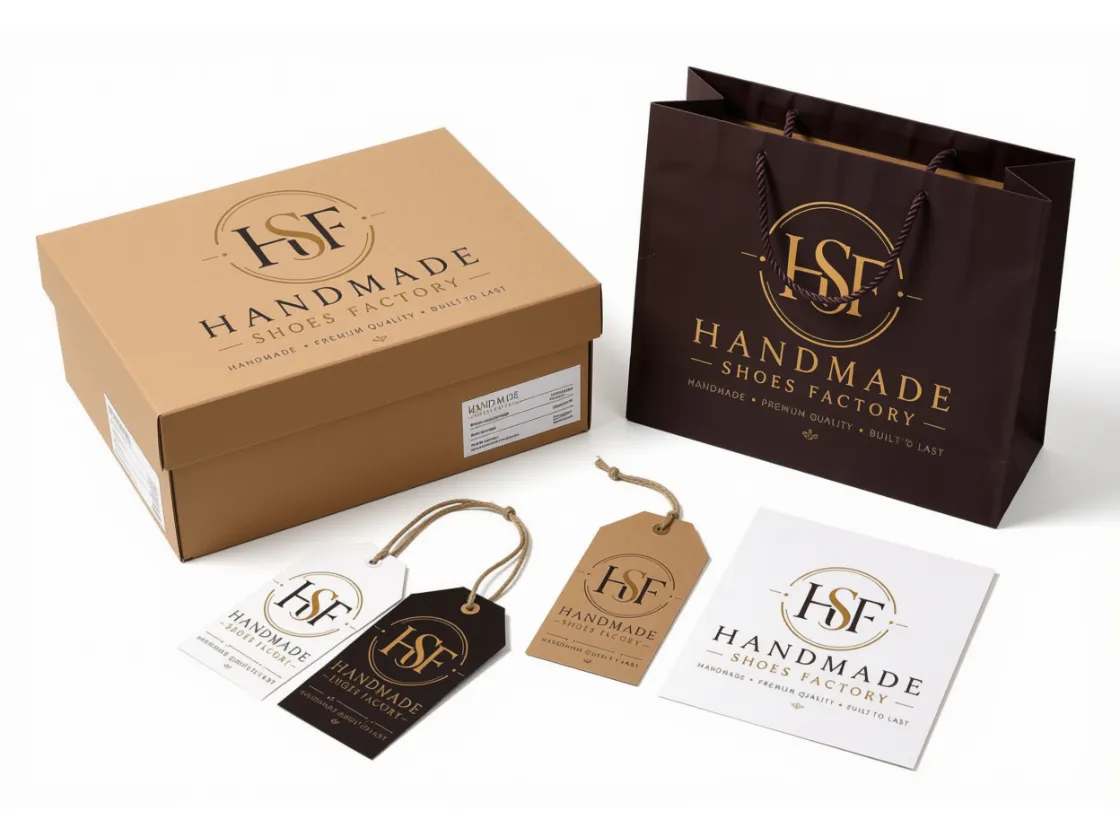
The factory price is not automatically the cost of getting a sellable pair into your warehouse. Logo embossing, metal branding, printed insocks, woven labels, branded outsoles, tissue, dust bags, hangtags, barcodes, inserts and custom boxes all affect the finished specification. Packaging dimensions also affect carton configuration and shipment volume, so a premium oversized box may change freight economics even when its unit purchase price looks modest.
Buyers should then distinguish ex-factory production cost from landed cost. Freight, insurance, customs duties, taxes, brokerage, port or terminal charges and inland delivery depend on destination and the agreed delivery term. Incoterms do not set the price; they clarify which party arranges and pays for defined stages of the transaction. The International Chamber of Commerce's Incoterms guidance is the authority for those responsibilities.
- 07 Brand presentation and delivery basisCompare quotes only after branding, retail packaging, carton assumptions, destination and shipping responsibility are written into the same scope.
Private Label vs White Label vs OEM Cost Structure
The model changes how much new development is required. White label usually starts closest to an existing product. Private label adapts an established construction to the buyer's market and identity. OEM can require the deepest design, component and tooling work because production follows the buyer's original specification.
| Cost Factor | White Label | Private Label | OEM |
|---|---|---|---|
| Starting point | An existing or near-finished style. | An established construction adapted for the buyer. | The buyer's tech pack, original design or custom specification. |
| Design control | Limited changes, usually colour, branding and packaging. | Moderate to high control over materials, components, finish and presentation. | Highest control over shape, pattern, last, construction and proprietary components. |
| Development cost | Usually the lowest because core development already exists. | Depends on how far the buyer moves from the existing construction. | Can be the highest where new patterns, lasts, dies or moulds are required. |
| Cost predictability | High when the base style and material package remain unchanged. | High after adaptations and sample approval are locked. | Improves after engineering, sample revisions and tooling are complete. |
| Launch speed | Fastest route when available styles fit the market. | Balanced route between differentiation and development time. | Longest route when the product must be built from the ground up. |
| Best suited to | Market testing and fast branded assortment expansion. | Brands seeking differentiation without unnecessary engineering. | Design-led brands with a defined product and long-term volume plan. |
Six Controls That Reduce Manufacturing Risk
Flexible MOQ
Order planning can be matched to the style, material and brand stage rather than forcing every buyer into the same volume.
Direct Factory Communication
Questions about patterns, materials, sampling and production go to the manufacturing team rather than through a trading layer.
NDA Protection
Design files, specifications and brand assets can be handled under an NDA before development proceeds.
Sample Approval
The physical sample gives both parties a reference for fit, material, construction, colour, finish and branding before bulk production.
Quality Inspection
Materials, construction, sizing, pair matching, finishing and packing can be checked against the approved production standard.
Export Experience
More than 23 years of manufacturing and shipments to 45+ countries support realistic export preparation and buyer communication.
A Seven-Step Cost-Controlled Production Process
Cost control is strongest when decisions are made in sequence and recorded. Skipping specification or sample approval does not remove work; it pushes uncertainty into a more expensive stage.
Requirement Discussion
Market, style, quantity, target quality and timeline.
Technical Specification
Materials, construction, sizing, branding and packaging.
Costing & Quotation
Scope, assumptions, MOQ, tooling and delivery basis.
Sample Development
Physical interpretation of the confirmed specification.
Sample Approval
Fit, finish and commercial details locked in writing.
Production & QC
Bulk manufacturing against the approved reference.
Shipping
Packing, documentation and dispatch under agreed terms.
Send decisions, not only inspiration.
A reference image is useful, but it cannot define the commercial product by itself. The following information lets the factory identify cost drivers before sampling.
- Style references, sketches or tech pack
- Quantity by style and colour
- Size range and expected size breakdown
- Upper, lining, insole and outsole preference
- Construction and finish expectations
- Logo placement and branding method
- Retail packaging and labelling requirements
- Destination, timeline and quote basis
Who This Manufacturing Guide Is For
The same seven factors matter at every scale, but the risk changes by buyer. A startup is usually protecting cash and validating demand. An importer may be protecting landed margin and delivery reliability. A luxury label may be protecting material integrity, finishing and brand presentation.
- Startup shoe brandsFor founders comparing low-MOQ options without stripping necessary development from the product.
- Established fashion labelsFor teams adding suppliers, categories or price tiers while protecting specification consistency.
- Retailers and private brandsFor buyers building exclusive men's or women's collections under their own identity.
- Importers and distributorsFor businesses that must compare factory price, shipment terms and full landed cost.
- WholesalersFor range planning across styles, colour splits, size runs and repeat-order economics.
- Luxury and bridal brandsFor products where material selection, handwork, embellishment and presentation drive value.
- Corporate buyersFor branded, uniform or project-specific footwear with written approval and delivery requirements.
- Sourcing and product teamsFor professionals who need a disciplined brief before asking multiple factories to quote.
Shoe Manufacturing Cost FAQs
These answers are deliberately direct. A factory cannot provide a reliable cost from a product name alone; it needs enough information to define what will be manufactured and delivered.
There is no responsible universal price per pair. The cost depends on the upper and lining materials, component quality, construction method, tooling, quantity by style and colour, size range, sampling, branding, packaging, inspection requirements and delivery basis. Send a tech pack, sketch or reference together with quantity, material and destination details to receive a useful quotation.
It can increase the unit cost because development, setup, material minimums and quality-control work are spread across fewer pairs. The effect is larger when a small order is divided across many styles or colours. Flexible MOQ remains valuable for testing demand, but buyers should compare the higher unit cost with the financial risk of holding excessive inventory.
Provide the shoe style or tech pack, target market, quantity by style and colour, size range, upper and lining materials, outsole and heel direction, construction method, branding, packaging, required quality checks, destination, timeline and preferred quote basis. Missing information can be discussed, but it should be resolved before comparing final supplier prices.
Turn Your Specification Into a Clear Production Quote
Share your style, materials, quantity, branding, packaging and destination. Handmade Shoe Factory will review the requirements for private label, OEM or custom production and identify the decisions needed before sampling.