
Safety Footwear Production: How Safety Shoes Are Made Step by Step
Safety footwear production is a specification-led manufacturing process. A brand is not simply ordering a rugged-looking boot; it is translating workplace use, fit, protective components, construction, target-market requirements and branding into a product a factory can repeat consistently in bulk.

Quick Answer
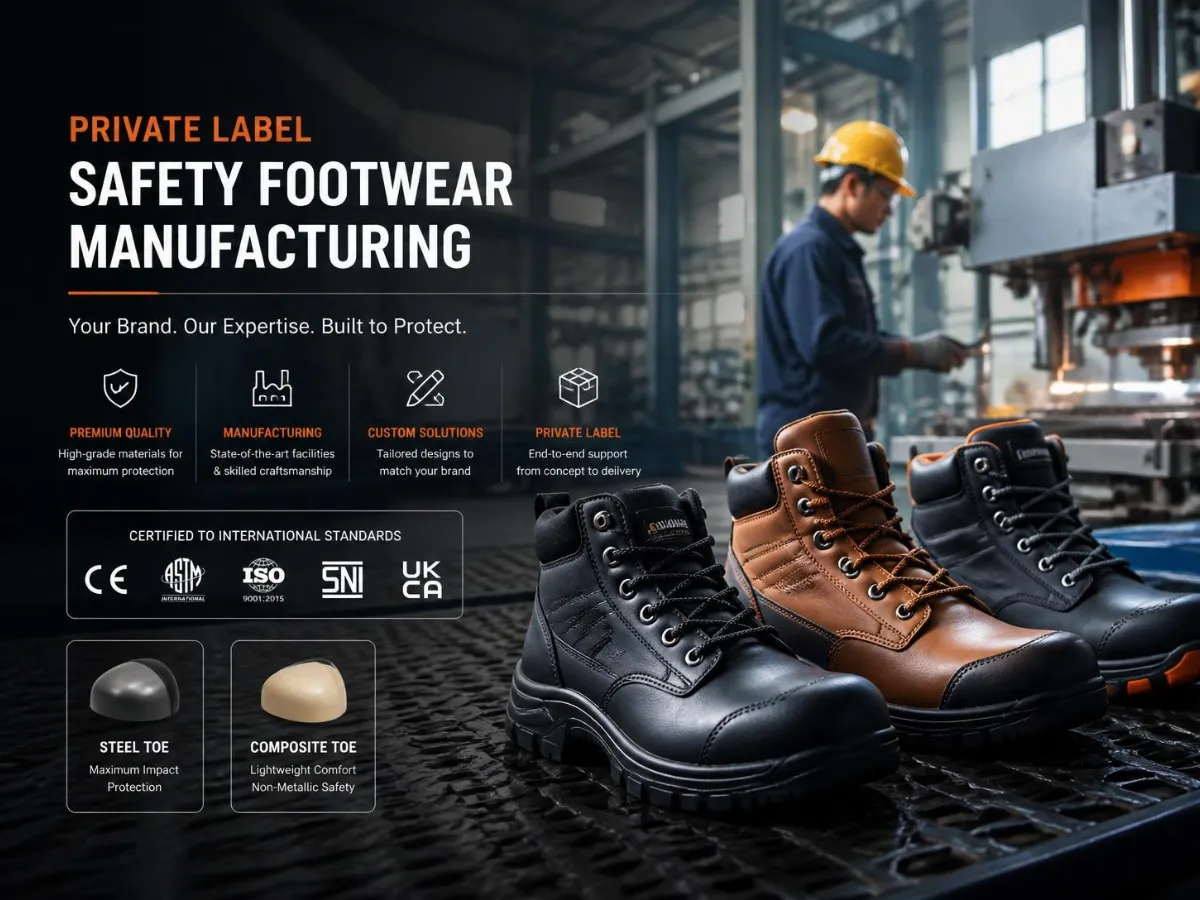
Safety shoes are generally developed through requirement review, component selection, last and pattern development, upper cutting and stitching, toe and midsole integration, lasting, sole attachment, finishing, inspection and project-specific testing. Bulk production should follow the approved specification and physical sample.
Safety Footwear Production Starts With the Buyer Specification
The production line should not be the first decision. The buyer should identify the intended workplace, target market, size range, protection direction, outsole environment, upper material, branding, packaging and expected quantity. Those choices affect almost every component that follows. For safety products, claims and markings should also be planned early so the final footwear can be tested and documented against the applicable requirement rather than being marketed from assumptions. A controlled safety footwear production process keeps the approved materials, protective components, fit and construction aligned from sampling through bulk manufacturing.
Step 1 — Select Protective Components
A project may require a steel or composite toe cap, puncture-resistant insert, slip-focused outsole, water-management package, ESD direction or another buyer-specified feature. Each protective element changes space, stiffness, weight, sourcing and construction. Toe caps influence last geometry; puncture layers affect the bottom package; outsole compound and tread affect grip. These decisions belong in the development brief before patterns are frozen.
Step 2 — Develop the Last, Pattern and Fit
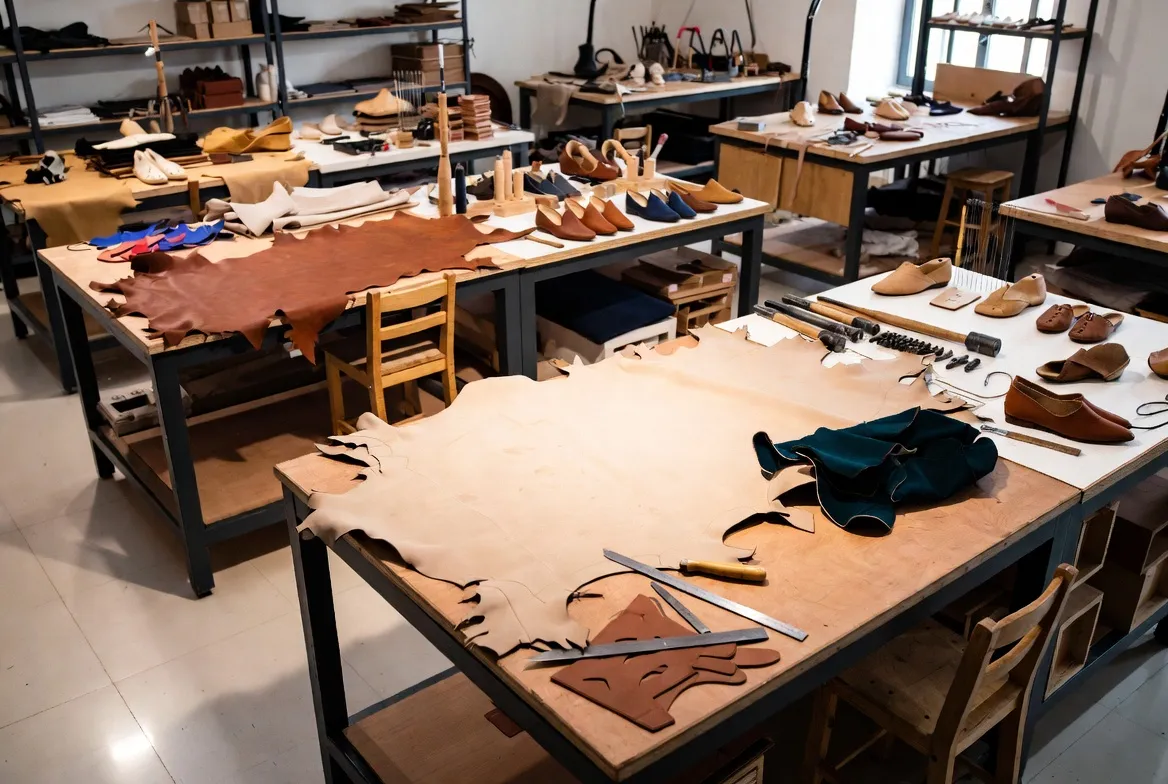
Safety footwear still has to fit like footwear. The last defines toe room, heel hold, instep volume and overall shape. The upper pattern must leave enough internal clearance for protective components while preventing excessive movement. Physical samples should be evaluated using the socks and use conditions expected in the market, because a boot that feels acceptable for two minutes can become uncomfortable over a full shift.
Step 3 — Cut and Stitch the Upper
Approved upper, lining and reinforcement materials are cut to pattern. The closing team assembles panels, tongue, collar, eyelets and seams according to the confirmed specification. Stitch density, seam location and reinforcement matter because work footwear sees repeated flex and abrasion. Bulk production should use the approved material package; silent substitutions can change durability, fit and appearance.
Step 4 — Integrate the Toe, Midsole and Bottom Package
Protective toe caps are positioned so the edge remains stable and does not create a pressure point. Puncture-resistant components, when specified, are integrated without unnecessary stiffness. The factory then prepares the lasting and bottom construction around the approved design. Small alignment errors may be invisible from outside but obvious to the wearer after hours on foot, so in-process checks matter here.
Step 5 — Lasting and Sole Attachment
During lasting, the stitched upper is pulled over the last and shaped into its final three-dimensional form. The outsole is attached using the agreed construction, preparation, adhesive or molding route, pressure and curing controls. For slip-focused footwear, compound selection and tread geometry should be considered together; an aggressive-looking pattern alone does not prove wet or oily floor performance.
Step 6 — Inspection, Testing and Private Label Packing
Finished footwear is checked for size consistency, construction, appearance, labeling, branding and packing. Where the buyer requires a safety claim, project-specific testing and documentation should support the finished configuration. Private-label orders can carry the buyer’s approved logos, labels, insoles, boxes and carton marks while the factory remains the manufacturing partner behind the brand.
Safety Footwear Production: Practical Decision Table
| Production Stage | Factory Focus | Buyer Approval |
|---|---|---|
| Specification | Feasibility, sourcing and construction route | Use environment, target requirement and brief |
| Components | Toe, insert, outsole and structural package | Required protection direction |
| Sampling | Last, pattern, fit and assembly | Physical sample and fit |
| Bulk production | Repeatability and in-process checks | No unapproved substitutions |
| Final QC | Sizing, finish, packing and records | Shipment release and required evidence |
Continue Your Footwear Research
Safety Footwear Production FAQs
What is safety footwear production?
It is the controlled development and manufacturing of work or protective footwear around a defined fit, construction and protection specification.
Can a brand choose steel or composite toe caps?
Yes. The choice should be made during specification and sampling because toe type affects weight, internal volume, last design and market positioning.
Does a safety shoe automatically meet ISO 20345 or ASTM F2413?
No. A product should only be represented as meeting a standard when the applicable finished footwear has been tested and documented for that requirement.
When should testing be planned?
Testing expectations should be identified before sampling so components and construction can be developed around the target requirement.
Can safety footwear use private-label branding?
Yes. Private-label programs can include buyer-approved logo placement, labels, insoles, boxes and carton marks.
What information should a buyer send before safety footwear sampling?
Send the intended workplace, target market, required protection direction, size range, materials, toe preference if known, outsole environment, branding, packaging, quantity and required documentation.
Why is the approved safety shoe sample important?
It gives the buyer and factory a physical reference for fit, component placement, construction, appearance and branding before bulk production is repeated.
Can outsole design alone make a shoe slip resistant?
No. Slip performance depends on the complete outsole system, including compound, tread geometry, surface conditions and the applicable test method.
Need a Manufacturing Partner for Your Brand?
Share your design reference, target quantity, size range, materials, branding, destination market and required timeline. Handmade Shoes Factory can review the project for feasibility, sampling and quotation.
Request a Manufacturing QuoteB2B manufacturing · Lahore, Pakistan · Private label, OEM and custom development.