
OEM & Private Label Manufacturing Since 2003
Safety Shoes Manufacturer for OEM & Private Label Industrial Footwear
Handmade Shoes Factory is a safety shoes manufacturer producing industrial safety footwear, construction work shoes and protective work boots for brands, importers, distributors, uniform suppliers and workplace-footwear businesses. We develop steel toe safety shoes, composite toe safety shoes, electrical safety shoes, puncture-resistant footwear and custom private label work shoes according to buyer specifications, testing requirements and destination market needs.
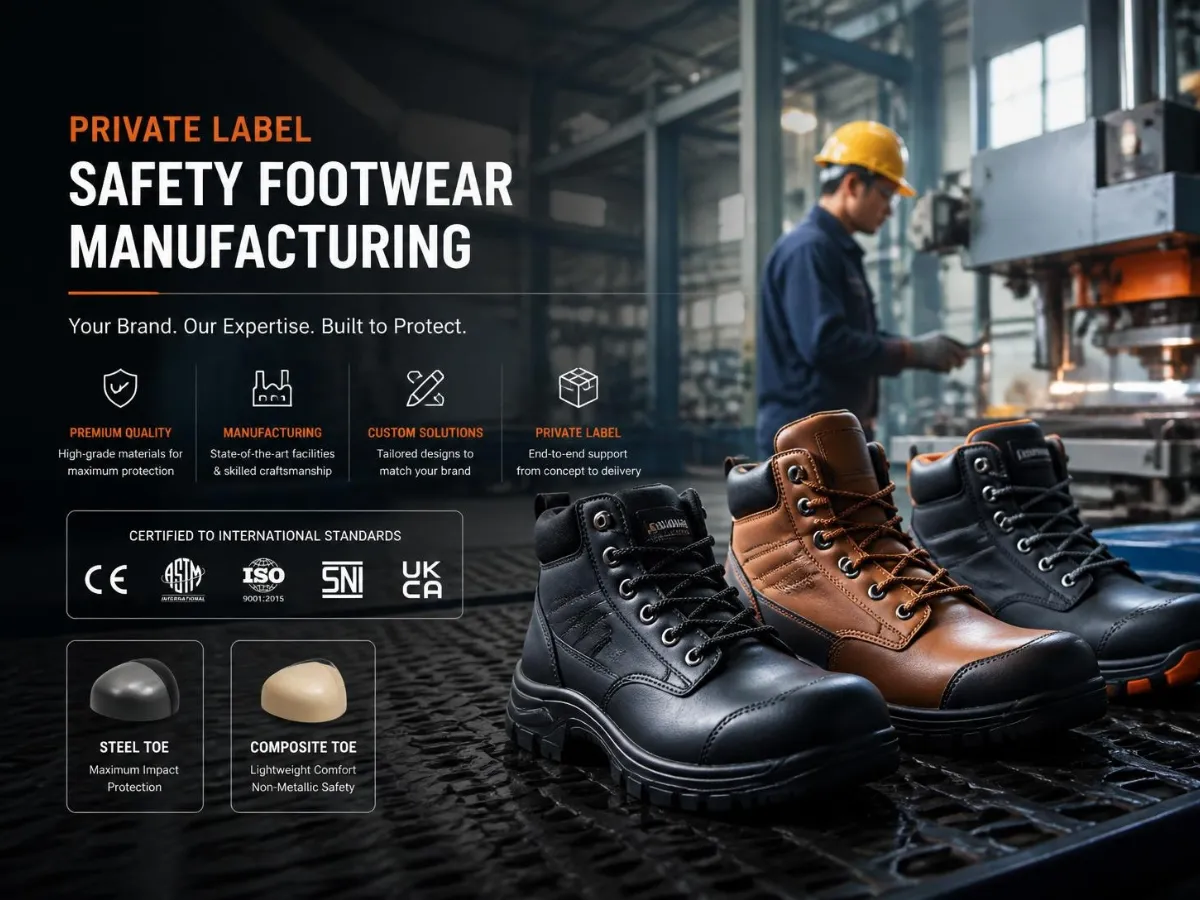
Direct Factory Overview
Private Label Industrial Safety Footwear Manufacturing
Handmade Shoes Factory is a B2B safety shoes manufacturer in Lahore, Pakistan. We support OEM, white label, private label and custom work-footwear projects through design review, component selection, physical sampling, buyer branding, packaging, production planning and worldwide export support. MOQ is category-specific and confirmed after reviewing construction, protective components, tooling, size range, colors, testing scope and quantity.
Safety Footwear Categories
Explore Industrial Safety Footwear Categories
Select the closest work-footwear category, including steel toe safety shoes, composite toe safety shoes, electrical safety shoes or construction work shoes, then send the required standard, construction, quantity, branding and packaging brief so component feasibility, sampling and testing requirements can be reviewed.
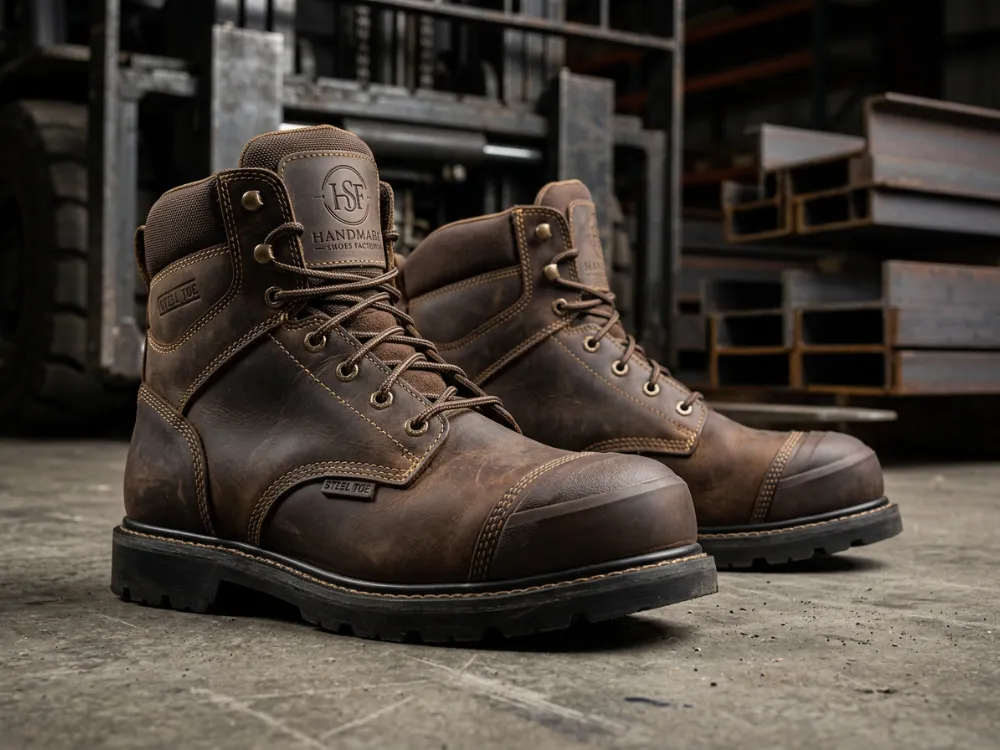
Steel-Toe Safety Boots
Work-boot constructions developed around a project-approved steel toe cap, last, upper, lining, outsole and target-market test plan.
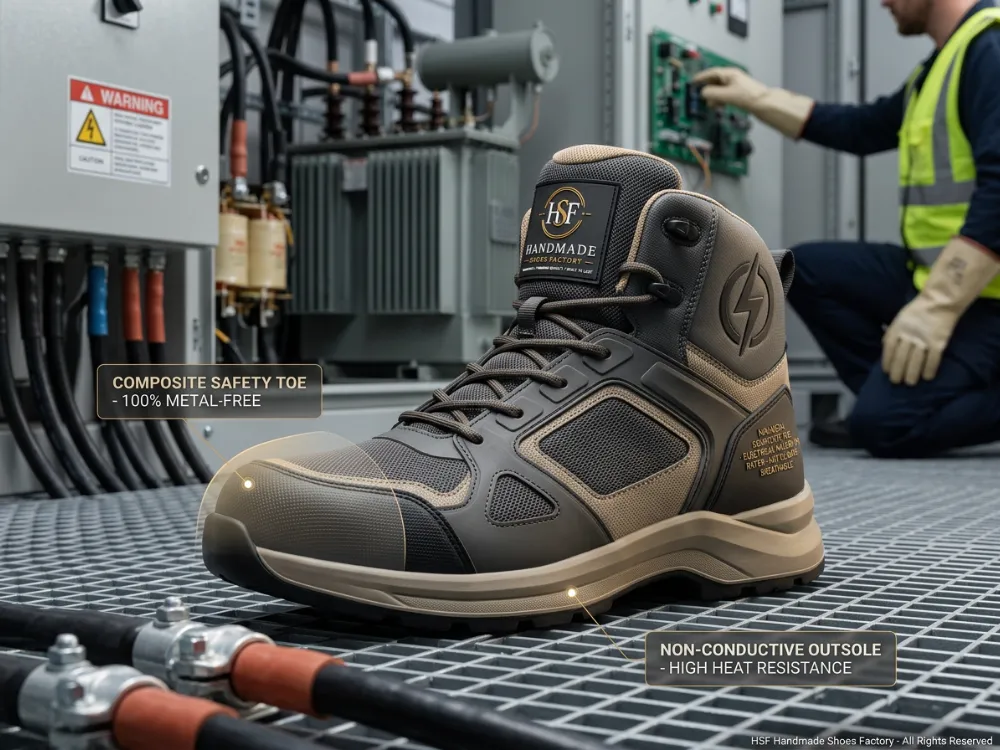
Composite-Toe Work Boots
Non-metal protective-toe directions for projects where lower weight, metal-free components or buyer-specified electrical properties are important.
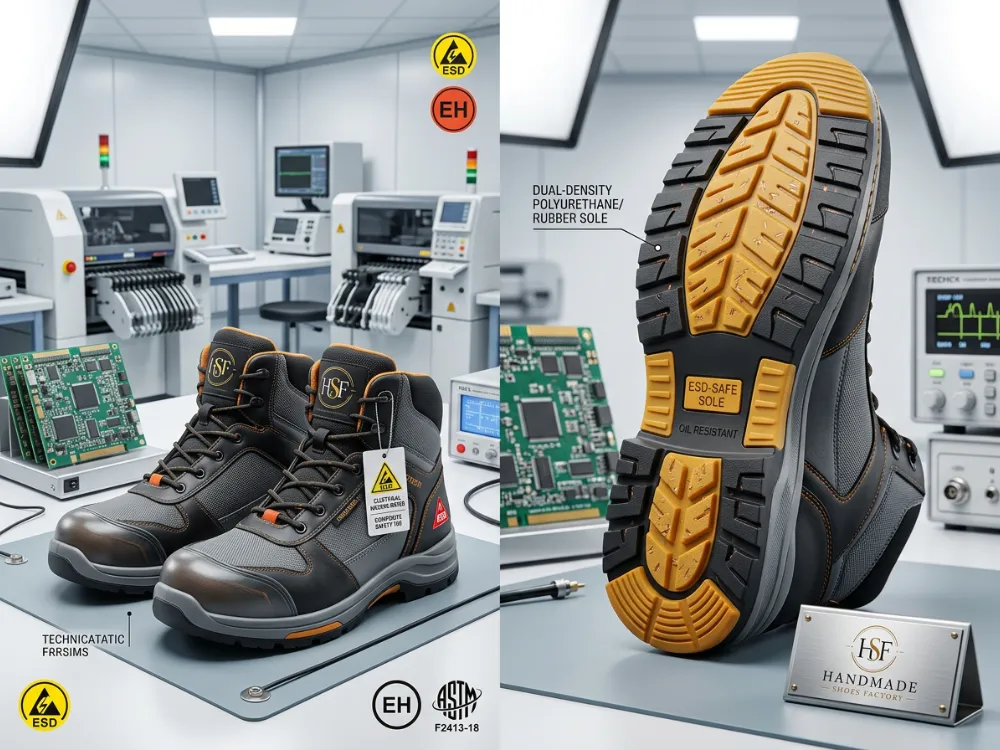
SD, ESD or EH Footwear
Static-dissipative, electrostatic-discharge and electric-hazard terms describe different requirements and must be specified and tested separately.
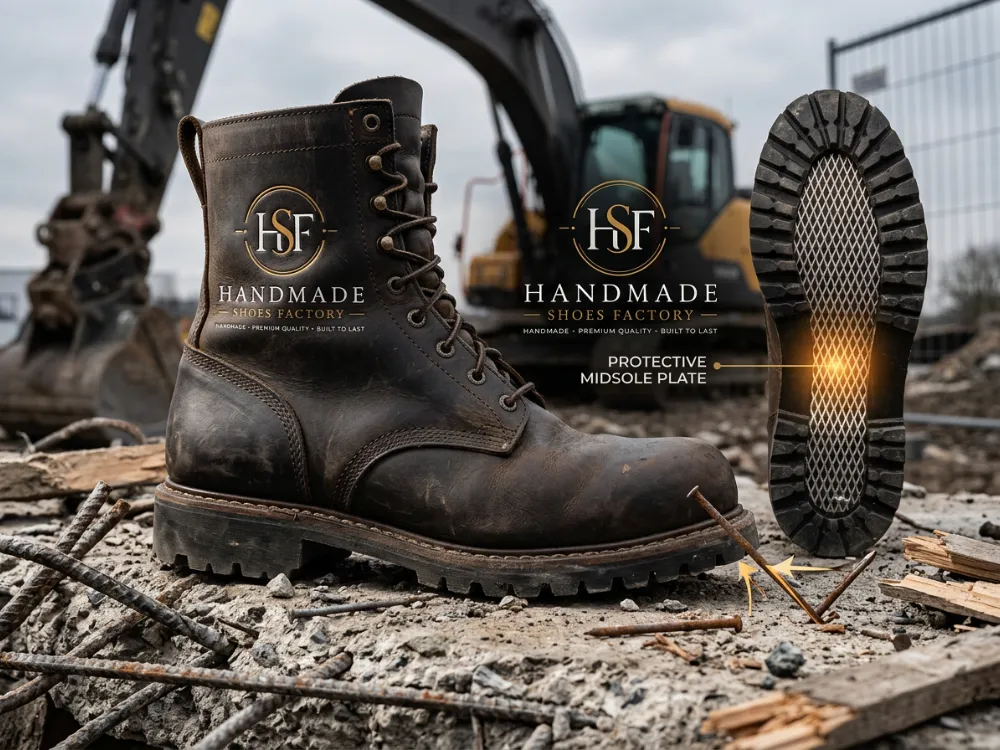
Puncture-Resistant Boots
Safety footwear developed with a buyer-selected puncture-resistant insert, sole package and flexibility direction, subject to testing.
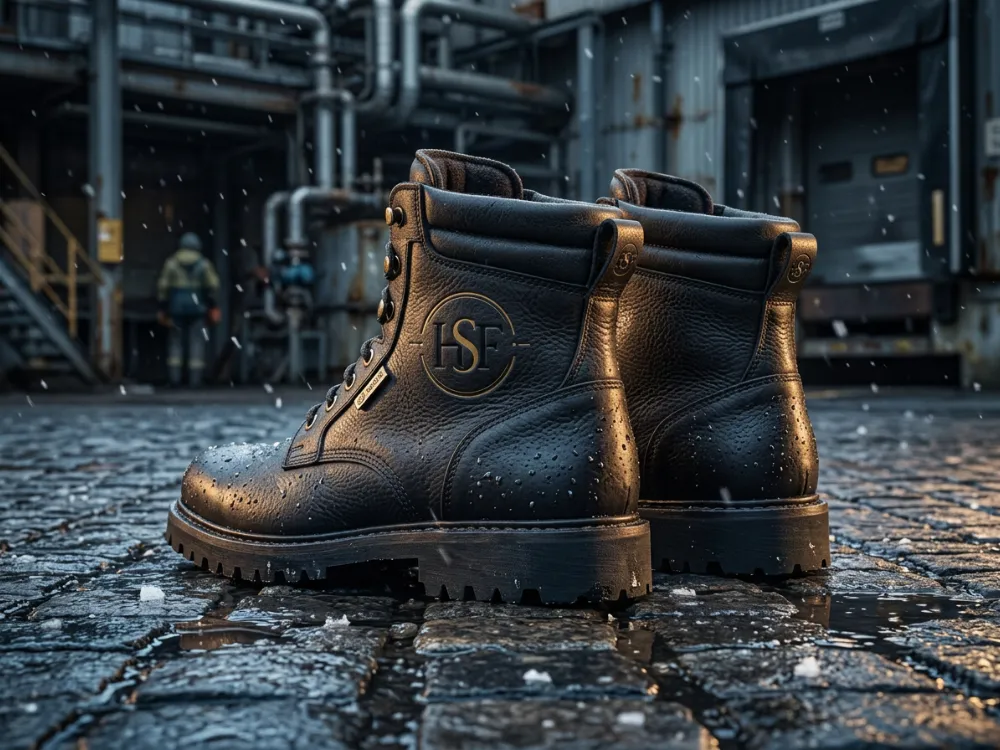
Water-Resistant & Insulated Boots
Boot directions using project-approved upper treatments, membrane or lining systems and insulation levels, with claims limited to the tested construction.
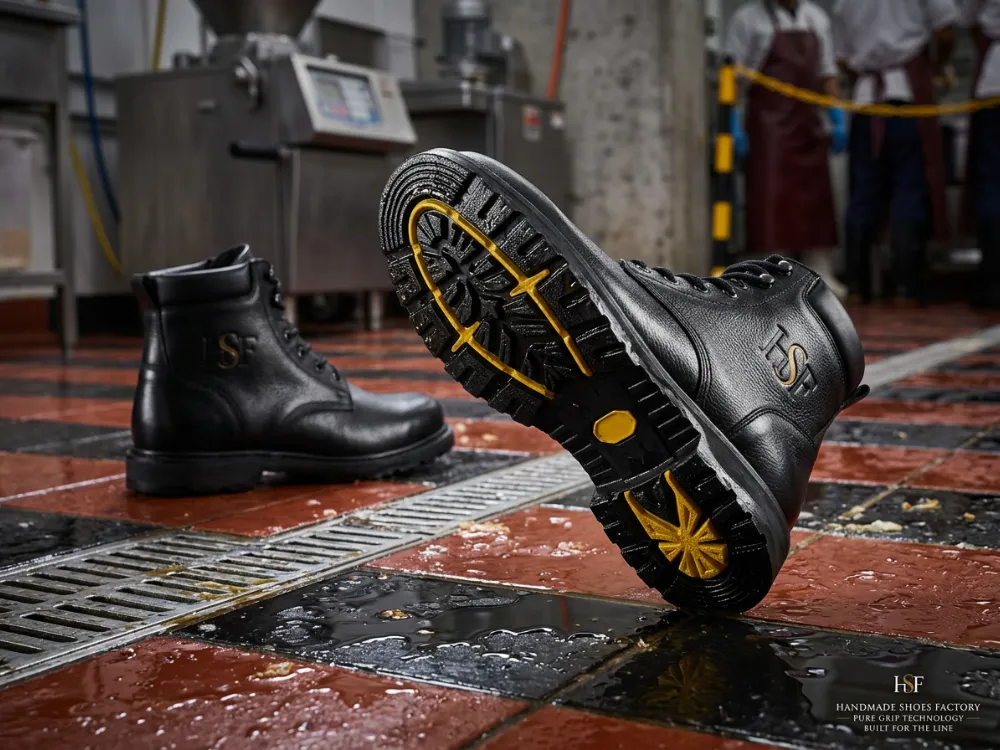
Slip-Performance Work Shoes
Low-cut or boot constructions developed around expected floor conditions, outsole compound, tread direction and the selected slip-test method.
Not Sure Where Your Design Fits?
Send Us a Reference Image
Share the reference image, workplace use, required standard or test class, expected quantity and destination market. Our factory team can identify the closest safety category and the information needed for feasibility review.
Project-Specified Components
Components Reviewed for Safety Footwear
Safety footwear is a complete construction rather than a collection of labels. The toe system, upper, lining, insole, puncture insert, outsole, bonding method, fit and branding must work together before sample and test planning are approved.
Protection System
Protective Toe System
Steel, composite or another project-approved toe-cap direction selected against the required standard, fit, weight and construction.
Upper Direction
Upper Materials
Leather, synthetic or textile directions reviewed for appearance, flex, durability, finish, target cost and intended work environment.
Comfort Direction
Lining & Comfort
Lining, collar padding, tongue construction, footbed and moisture-management choices developed around fit and wearer requirements.
Bottom Protection
Puncture-Resistant Insert
Metallic or textile insert directions considered according to target requirement, flexibility, thickness and sole construction.
Ground Contact
Outsole & Tread
Outsole material, hardness, tread geometry, oil-contact expectations and slip-test direction confirmed for the project.
Weather Direction
Water & Thermal Package
Upper treatment, membrane, seam, lining and insulation choices reviewed when the buyer requests water or cold-condition performance.
Wearability
Closures & Visibility
Laces, eyelets, hooks, zips, pull tabs and reflective details can be developed against the intended workplace and brand direction.
Private Label
Branding & Packaging
Buyer-approved logos, labels, insole branding, boxes, information inserts, hangtags and carton marks can be included in private-label orders.
Choose Your Manufacturing Route
OEM, White Label & Private Label Safety Footwear
The manufacturing route depends on whether the buyer already owns a technical specification, wants to adapt an agreed construction or needs coordinated development from brief through branded packing.
01
OEM Manufacturing
Provide the tech pack, hazard and test requirements, size range, component specification, branding artwork and packaging instructions for feasibility review.
Best for: technically defined buyer-owned products
02
White Label
Begin from an agreed existing construction, then adjust available materials, colors, branding and packaging. Protective claims still require evidence for the final configuration.
Best for: faster branded programmes with limited structural changes
03
Full Private Label
Coordinate design review, component selection, sample development, buyer branding, packaging, production planning and agreed inspection through one manufacturing relationship.
Best for: end-to-end branded safety-footwear development
What You Can Customize
Build the work footwear around your brief
Availability is confirmed against MOQ, tooling, components, test requirements, target cost and destination-market rules.
- Boot height, low-cut profile, last, width, fit and size range
- Steel or composite toe direction and required performance class
- Puncture insert, outsole, tread, flex and bonding construction
- Upper, lining, collar, tongue, footbed, color and stitching
- Water, thermal or electrical-property brief where applicable
- Buyer logo, labels, insole branding, boxes and information inserts
Specification, Testing & Claims
Safety Footwear Standards, Testing & Compliance Requirements
A safety shoes manufacturer can build toward a buyer-specified standard, but certification or conformity cannot be assumed from a component name. The final product and requested claims should follow an appropriate independent testing or conformity route.
ASTM F2413-24
Covers minimum performance requirements for protective safety-toe-cap footwear and includes multiple workplace-hazard properties.
View ASTM standard →ISO 20345:2021
Specifies basic and additional requirements for general-purpose safety footwear, with specialized risks addressed by complementary standards.
View ISO standard →Workplace Selection
The employer, importer or buyer should select footwear against the actual hazard assessment and applicable destination-market obligations.
Review OSHA guidance →Evidence Before Marking
Test reports, labels and product claims should correspond to the final approved components and construction. Changes may require reassessment or retesting.
How It Works
Safety Footwear Manufacturing Process: Design to Export
The process aligns the workplace brief, approved sample, test plan, production reference, quality checks, branding and shipment documentation. See the complete process →
01
Define the Brief
Share category, workplace hazard, required standard, size range, quantity, materials, branding, packaging and destination.
02
Feasibility Review
We review components, tooling, MOQ factors, sample scope, intended claims and information required before quotation.
03
Sample Development
An initial physical sample is often completed in 10–14 days after final specification. Complex components may extend the cycle.
04
Testing & Approval
The buyer coordinates the required laboratory or conformity route and approves the tested construction before bulk production.
05
Production & Export
Bulk production follows the approved reference, with agreed checks, buyer branding, packing and export handoff.
Prepare Your Project Brief
What to Send Our Safety Shoes Manufacturer
A technical brief should identify the intended workplace use and evidence requirements before component selection, sampling and testing are planned.
Workplace & Hazard Brief
Describe intended work conditions and the hazards the footwear must address.
Required Standard
Provide the exact standard, classification or test method required for the destination market.
Quantity & Size Range
Share expected quantity, size system, width or fit requirements and size breakdown.
Protective Components
State toe, puncture, electrical, water, thermal, outsole or other required component directions.
Branding
Provide approved logo artwork, label content and placement requirements.
Packaging & Information
Describe boxes, inserts, labels, hangtags, carton marks and required product information.
Destination & Timeline
Share delivery country, target launch or delivery date and freight planning information.
Testing Route
Identify the preferred laboratory or conformity route when already selected by the buyer.
Essential Buyer Questions
Safety Shoes Manufacturer FAQs
Short answers to common questions buyers ask before sampling and production.
Are you a safety shoes supplier for distributors and wholesalers?
Yes. Handmade Shoes Factory works with distributors, wholesalers and industrial buyers for OEM, private label and custom safety footwear programs.
Do you manufacture steel toe safety shoes for construction work?
Yes. We develop steel toe safety shoes and construction work shoes according to buyer specifications, required components and applicable testing requirements.
What is the MOQ for private-label safety shoes?
MOQ is category-specific. It depends on construction, protective components, tooling, outsole, color count, size range, testing scope, branding and packaging. The confirmed quotation provides the applicable minimum.
How long does a safety-shoe sample take?
An initial physical sample is often completed in 10–14 days after the final specification is confirmed. New tooling, specialist components, sole development, material sourcing and revisions can extend the complete cycle.
Can you manufacture to ASTM F2413 or ISO 20345 requirements?
We can review a project brief that references ASTM F2413, ISO 20345 or another buyer-specified standard. Required performance classes and test methods must be defined, and claims for the final product should be supported by appropriate independent testing or conformity evidence.
Can you make ESD, static-dissipative or electric-hazard footwear?
These terms describe different electrical-property requirements and should not be used interchangeably. Share the exact target standard and classification so component and construction feasibility can be reviewed before sampling and testing.
Can our brand logo and packaging be added?
Yes. Private-label projects can include buyer-approved logos, insole branding, tongue or size labels, shoeboxes, information inserts, hangtags and carton marks.
Do you guarantee certification or workplace suitability?
No universal certification or workplace-suitability guarantee is made. Suitability depends on the final construction, test evidence, destination rules and the employer’s hazard assessment.
What should I send for a safety-footwear quotation?
Send the footwear type, workplace brief, required standard or performance class, sizes, quantity, materials or components, branding, packaging, destination market and target date.
Do you support worldwide export for safety footwear?
Worldwide export support is available. Shipment documentation and product information requirements are reviewed against the destination and the buyer-approved product and testing scope.
Start the Conversation
Ready to Develop Your Safety Footwear Range?
Share the work-footwear category, intended use, required standard or test class, quantity, sizing, branding, packaging and destination market. We can review feasibility and identify the information needed before sampling and quotation.